

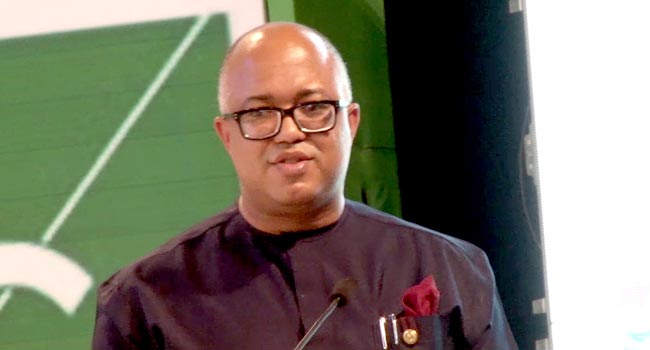
By our reporter| The director-general of the Nigeria Centre for Disease Control (NCDC), Chikwe Ihekweazu, on Wednesday said that 90 per cent of COVID-19 patients will recover without any intervention.

Ihekweazu who made the disclosure at a press briefing of the presidential task force on COVID-19 in Abuja, said what a COVID-19 patient usually requires is support for the body to recover by itself.
He said, “We should remember that 90 per cent of these patients recover without any intervention. So, if you take something and say you recovered and that something is why you recovered, it doesn’t quite add up. So, hopefully, there will be some treatment emerging over the next few years but remember that people recover from many viruses; that’s the way it happens.”
“There are very few viruses with a cure. Even the ones that have a bad outcome like lassa fever – 20 per cent of patients die from it – it still means that 80 per cent of patients will recover without any treatment per se. What happens is that the body is supported to recover on its own. So, you go to a hospital and for COVID-19, you’re given oxygen. Oxygen is not really a treatment; it’s to keep you alive for long enough for you to recover yourself.”
The NCDC boss use the oppurnity provided by the briefing to appeal to political leaders to refrain from disclosing details of COVID-19 patients in their states, but allow experts to handle that.
“We’re really appealing to our leaders across the country. Please, let the experts do the reporting. Nobody should reveal the identity of a patient, even if it’s the first patient in your state. Please, do not reveal the identity of a patient; the circumstances whether he’s a doctor not. We don’t need all of that. This is a virus. They haven’t committed an offence; they haven’t done anything wrong. We have to show empathy towards all our patients; that’s what we signed up to as healthcare workers,” he said.
According to him, political leaders announcing details of COVID-19 cases is not “ill-intentioned”, but about them “not understanding the ethics and norms of the medical practice and public health”.
Leave a Reply