

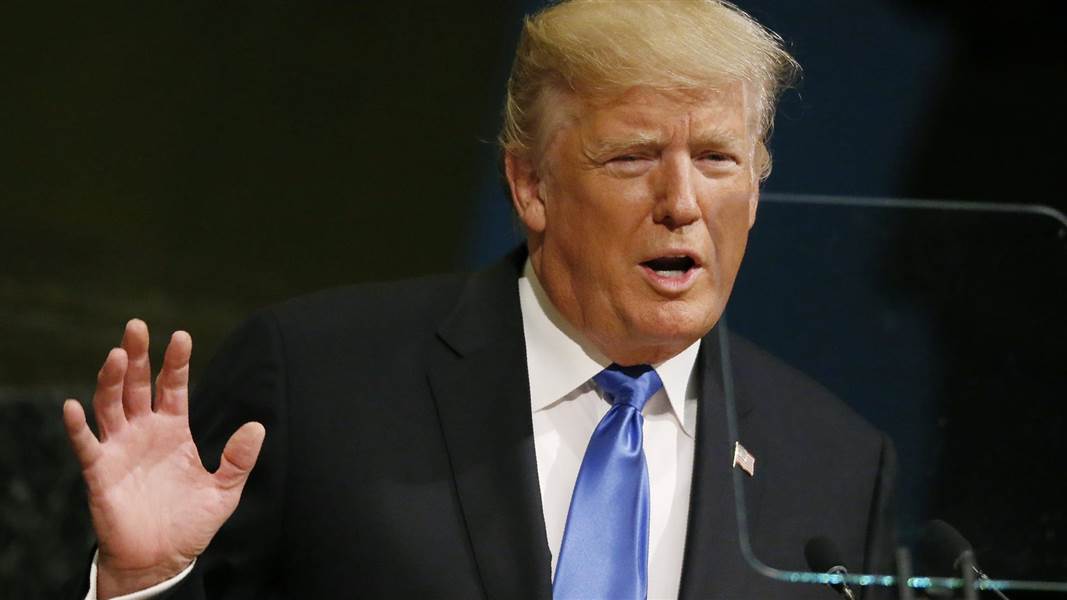
U.S. President Donald Trump declared a national emergency over the quickly spreading coronavirus on Friday, opening the door to more federal aid to combat a disease that has infected over 138,000 people worldwide and left more than 5,000 dead.
The impact of the coronavirus on everyday life deepened around the world, and it was detected for the first time in several more countries. More schools and businesses closed to try to slow its spread, governments took other drastic steps, the global sporting calendar was left in tatters and people faced greater restrictions on where they could go.

“To unleash the full power of the federal government to this effort today, I am officially declaring a national emergency – two very big words,” Trump said in remarks at the White House, adding that the U.S. situation could worsen and “the next eight weeks are critical.”
Trump had faced criticism from some experts for being slow and ineffective in his response to the crisis and playing down the threat. The latest steps came two days after Trump announced travel restrictions blocking U.S. entry for most people from continental Europe. While he exempted Britain at the time, on Friday he said that might change because U.K. infections have “gone up fairly precipitously.”

Trump, who previously was pictured standing near a visiting Brazilian official who has tested positive for the virus, said he himself would be tested “fairly soon.” But did not plan to isolate, noting he was suffering no symptoms.
Trump said the federal government was partnering with the private sector to accelerate production of test kits to make them more widely available to Americans in an effort to track the virus’ spread.
But he said, “I don’t take any responsibility at all” for the lack of needed testing capacity early on in the outbreak, instead blaming previous government policies. The U.S. coronavirus death toll reached 46 on Friday after six more deaths were reported in Washington state.
The final global economic cost remains unknown, but travel bans have hammered airlines and travel companies, while financial markets have been hit by panic selling.
The three major U.S. stock indexes rallied more than 9% on Friday, rebounding from Wall Street’s biggest daily drop since 1987 after Trump declared the national emergency.
Despite a limited recovery on Friday, the main U.S. stock indexes faced their biggest weekly declines since the 2008 financial crisis, and remain around 25% below the record highs achieved in mid-February.
The World Health Organization (WHO) called Europe the epicenter of a coronavirus pandemic after the number of cases in China, where it originated, slowed to a trickle. The WHO called the death toll reaching 5,000 globally “a tragic milestone.”
The WHO’s top emergency expert Mike Ryan said social distancing was a “tried and tested method” to slow the spread of a virus but “not a panacea” that would stop transmission.
“Blanket travel measures in their own right will do nothing to protect an individual state,” Ryan said.
Reuters