

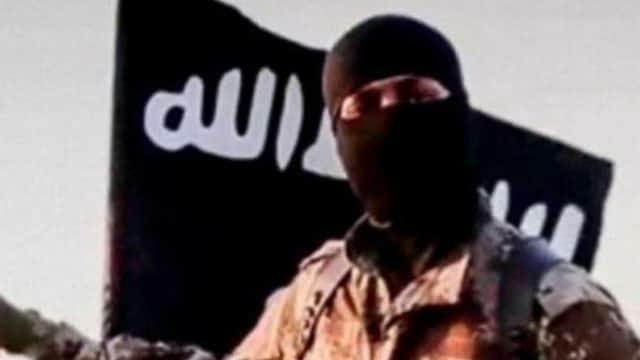
An ISWAP leader previously declared dead by Nigerian authorities has now been announced killed again, this time in a joint operation involving American intelligence support. Here’s everything to know about Minuki and what his death means for ISWAP and IS.
By the time the announcement that Abu Bilal Al-Minuki was killed reached the outside world, the strike itself was already hours old. In the early hours of Saturday, May 16, somewhere in Metele, in Borno State, northeastern Nigeria, a compound had been hit.

First, US President Donald Trump posted a statement on Truth Social. Another came from Bayo Onanuga, Special Advisor to Nigeria’s president on Information and Strategy, on Facebook and X. Al-Minuki, described as one of the most senior figures inside Islamic State West Africa Province (ISWAP), was dead, both statements claimed.
“Tonight, at my direction, brave American forces and the Armed Forces of Nigeria flawlessly executed a meticulously planned and very complex mission to eliminate the most active terrorist in the world from the battlefield. Abu-Bilal al-Minuki, second in command of ISIS globally,” Trump said in the post.

The Nigerian military said special forces were deployed to block escape routes while air components executed precision strikes against what was described as a “concealed and fortified terrorist enclave.” The mission was completed, the military added, “without casualties or equipment loss on the part of friendly forces.”
During a televised interview, the Director of Nigeria’s Defence Media Operations, Major Gen. Michael Onoja, explained that the US military provided intelligence and surveillance support, while Nigeria deployed boots on the ground for the operation.
“There were no foreign boots on the ground during this operation. What we received were intelligence, surveillance, reconnaissance support and other force enablers,” he said.
There was only one problem: according to the Nigerian military itself, Al-Minuki had already been killed once before – in 2024.
For nearly two years, Al-Minuki’s name – also known as Abubakar Mainok or simply Abu-Mainok – had existed in the strange afterlife of Nigeria’s counterterrorism war; a conflict where terrorist commanders are frequently declared dead only to reappear later through propaganda videos, from Abubakar Shekau to Abu Mus’ab Al-Barnawy.
“Our determined Nigerian Armed Forces, working closely with the Armed Forces of the United States, conducted a daring joint operation that dealt a heavy blow to the ranks of the Islamic State,” President Bola Ahmed Tinubu said in a statement issued from Aso Villa on Saturday. “Early assessments confirm the elimination of the wanted IS senior leader, Abu-Bilal Al-Manuki, also known as Abu-Mainok, along with several of his lieutenants, during a strike on his compound in the Lake Chad Basin.”
However, in the counterinsurgency operations in northeastern Nigeria, where insurgency and information warfare have become deeply intertwined, certainty is always expensive.
So who exactly was Al-Minuki?
Trump described him as “the second in command of ISIS globally.” AFRICOM called him “the director of global operations for ISIS”. The Nigerian Defence Headquarters offered the most specific claim: that as recently as February 2026, Al-Minuki “may have been elevated to the position of Head of the General Directorate of States, placing him as the second most senior leader within the ISIS global hierarchy.”
The same statement linked him to the 2018 Dapchi kidnapping of more than 100 schoolgirls, to the facilitation of fighters into Libya between 2015 and 2016, to weapons manufacturing and drone development, and to “economic warfare” coordination across the Sahel.
Al-Minuki was the man most responsible for keeping ISWAP wired into the Islamic State’s international infrastructure. His death is a meaningful disruption, but not the decapitation of a global terrorist hierarchy.
ISWAP has repeatedly demonstrated that it can regenerate leadership after losses. It replaced leaders and survived the loss of top commanders. Its resilience has never derived primarily from any single commander; rather, it has stemmed from the political and economic conditions within Borno and across the Lake Chad Basin that continue to enable recruitment, taxation, and territorial control. The DHQ acknowledged as much, noting that “Battle Damage Assessment is ongoing, while follow-up exploitation operations are being conducted to clear remaining terrorist elements in the area.”
spokesperson, in a Facebook post on Saturday, claimed the discrepancy between the person killed in 2024 and the one killed now was due to a case of mistaken identity. He also warned that sceptics had “rushed to question the authenticity of the Nigerian-American joint military operation” and said the criticism was “premature and not grounded in the realities of modern counterterrorism operations.” He noted that Nigeria’s Armed Forces were “operating in one of the world’s most complex insurgency environments where targets often move across borders and use multiple identities.”
Nigeria has lived through this before. Shekau was declared dead multiple times across more than a decade until soldiers grew to distrust the announcements and civilians in Borno learned to reserve judgment until they saw real change on the ground.
The Presidency’s warning that “premature dismissal of military claims can inadvertently undermine operational morale and strategic messaging” is a legitimate concern. But it is also an argument for public deference rather than public accountability.
For now, Trump has another example to point to as evidence that American military engagement abroad delivers results. Tinubu also has a successful joint operation that projects competence and international partnership without appearing commanded from outside.
The Armed Forces of Nigeria, in Major Gen. Uba’s words, have demonstrated “unwavering resolve to confront terrorism and deny extremist groups the ability to threaten national, regional and international security.”
But in the displacement camps and farming communities scattered across Borno State, the significance of Saturday’s strike will be measured differently.
HumAngle report