

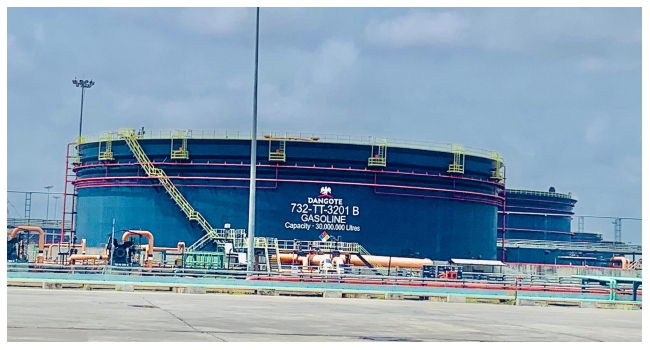
Dangote Petroleum Refinery’s planned October IPO, which could become Africa’s largest, is designed to let Nigerians share in the company’s growth, its CEO has said, adding that a foreign listing is at least three years away.
According to Reuters report, the refinery has submitted an application for a $5 billion IPO to Nigeria’s Securities and Exchange Commission, although the final size is not decided.
“We really want to drive participation,” CEO David Bird said in an interview. “The mandate of the IPO was to be the people’s IPO.”
According to Bird, the company wanted at least three years of proven production and financial performance before pursuing an overseas listing, which could support a stronger valuation. London has been mentioned as a possible venue.

Bird, however, declined to comment on the size of the IPO or the refinery’s valuation. A source said the company could take into account the $2.5 billion raised in a July private placement, which valued the refinery at about $40 billion.
The refinery, owned by Africa’s richest man Aliko Dangote, has emerged as a major beneficiary of disruption linked to the Iran war, selling jet fuel across Africa and into western Europe as buyers sought alternative supplies. It became Europe’s largest supplier of jet fuel in June and July.
According to Bird, preparations for the IPO were on schedule and investor interest had been strong during pre-marketing and the July private placement.
Africa Finance Corporation said on Thursday it led a group of strategic investors in the private placement, adding the deal was 3.7 times subscribed and attracted strong demand from African and international institutional investors.
Bird said the refinery compared favourably with U.S. refining assets because of its access to local crude supplies, strong domestic demand and integrated operations.
He confirmed the company aims to double refining capacity to 1.4 million barrels per day within three years, funded partly through the IPO and debt. He said the expansion would cost substantially less than the roughly $20 billion spent on the original refinery.
Africa remains structurally short of refined fuels and petrochemicals, creating significant room for growth, Bird said.
The refinery supplies most of Nigeria’s gasoline and diesel demand and all of its jet fuel needs.
With Reuters report