

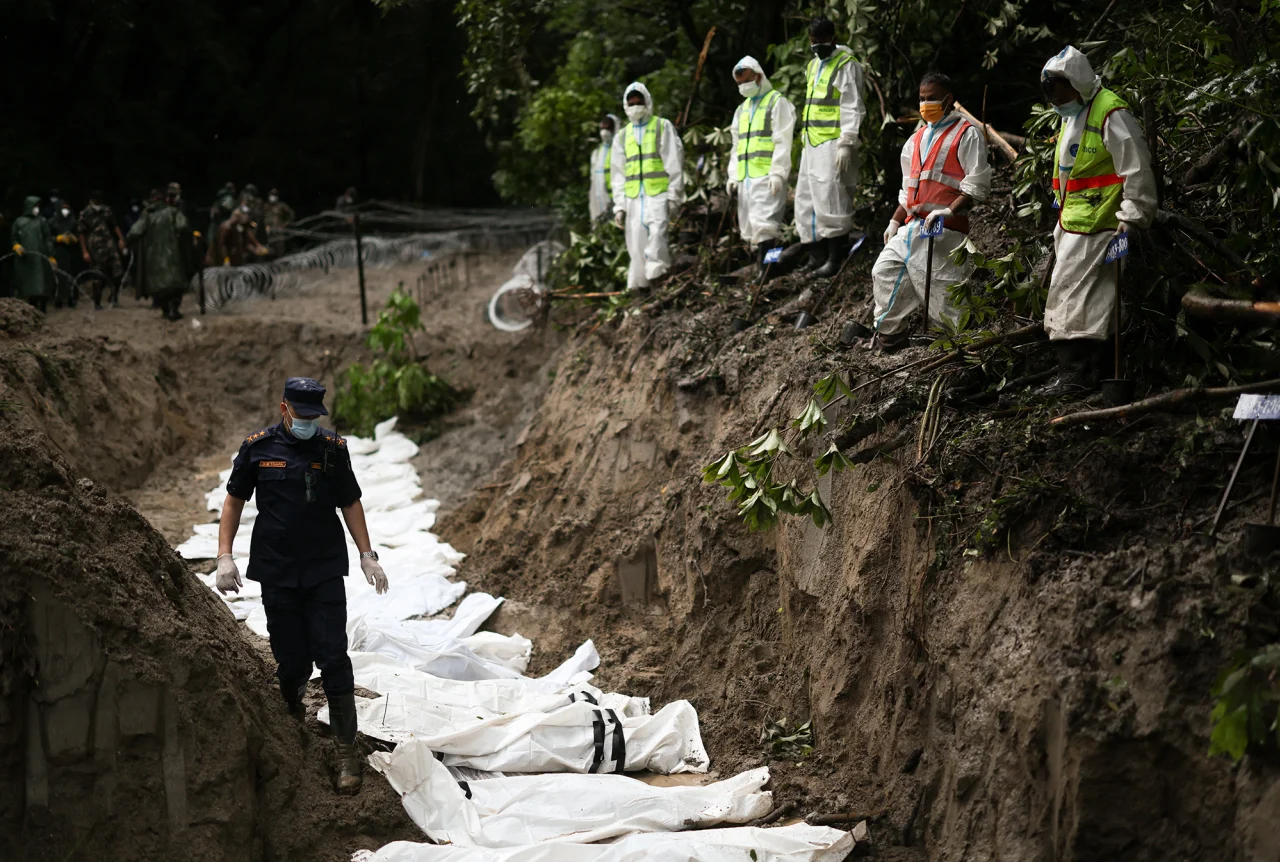
The number of people who have died in Nepal following last week’s catastrophic flooding has risen to at least 1,050, according to a recent update from the country’s National Disaster Risk Reduction and Management Authority (NDRRMA).
At least 3,916 people are still missing in Nepal, NDRRMA said, including 583 foreign nationals, 639 people working on hydropower projects, as well as members of the Nepali army and police.

A total of 11,993 people have been recorded as rescued since last Wednesday, the NDRRMA update also said.
“In hindsight,” warning signs were visible ahead of disaster, new report finds

The glacier that collapsed causing a devastating landslide and flooding had visible signs of change days ahead of the disaster, according to a new report from a consortium of scientists.
“In hindsight, there were some pre-event indications,” including melt water that had turned visibly brown and signs of a crack propagating into the surrounding bedrock slope days before the collapse, scientists said in a report published last week.
The report – which also suggests more comprehensive early warning systems downstream could have saved a “significant number of lives” – comes as the catastrophe has shown what experts say is a need for better warning systems in a vast Himalayan region that is difficult to monitor.
Chinese and Nepali authorities had met as recently as May to discuss bolstering cooperation on monitoring natural hazards in the Himalayas, according to government official who was present at that meeting.
Early warning systems had been set up recently in this region, focusing on several glacial lakes in China, but no operational system was set up in this area for glacier-related hazards, according to the report from the HiRISK scientific consortium, which monitors risk data in mountain environments.
Once the collapse started, however, the warning times from conventional systems would have likely been insufficient for evacuation at a border checkpoint that was among the first areas hit – given just how fast the initial landslide was moving. Further downstream, with warning times of 10 minutes or more, comprehensive systems could have saved lives, the scientists said.
Other experts have said that the glacial collapse highlights the urgency of better monitoring programs – and cooperation between countries – to detect changes.
“There is almost no way that anyone could have detected this event prior – it happened in a blind spot … (making it) extremely difficult to detect,” Austin Lord, a senior fellow in the Energy, Water and Sustainability program at the Stimson Center, wrote in a recent commentary.
He also highlighted “how greater communication, information sharing, and collaborative analysis of transboundary risks between Nepal and China are sorely needed.”
Agency reports