

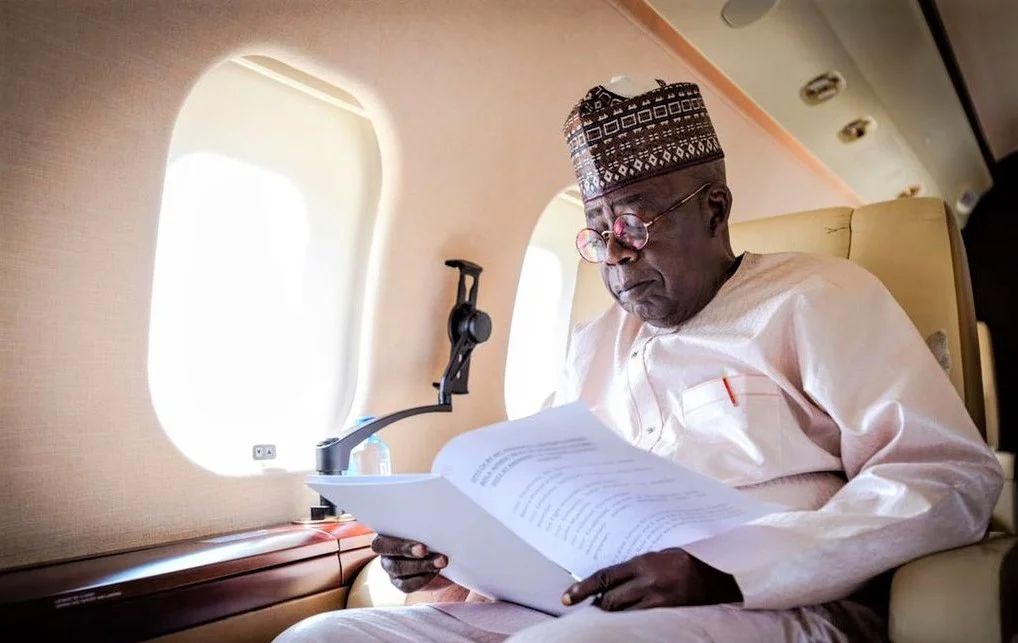
President Bola Tinubu and his delegation are operating from The Peninsula Paris, one of the French capital’s ultra luxury hotels, where a Grand Premier Suite is currently listed at about €6,864,.roughly ₦10.9 MILLION per night before additional charges.
According to Kayode Ogundamisi, a former aide of late President Muhammadu Buhari, with taxes and fees, the listed price rises to about €7,550, approximately ₦12 million a night.

Other rooms and suites reportedly range into several thousand euros, with a €3,000 room costing roughly ₦4.77 MILLION per night at current exchange rates.
There are also claims that members of the Nigerian delegation are occupying rooms costing around €3,000 and that security arrangements have taken over an entire floor.

“But the contrast is striking: millions of naira being spent on luxury accommodation in Paris while millions of Nigerians struggle with food prices, transport costs, electricity bills and the wider economic pressures associated with the government’s reforms”, Ogundamisi noted.
“For Nigerians tightening their belts, the question is simple: how much is this Parisian luxury costing the Nigerian taxpayer and who is picking up the bill”?, he asked.
While Tinubu and his aides luxuriate in Paris, Nigerians continue to face severe economic hardship due to sweeping macroeconomic reforms embarked by President Tinubu which has created a stark divide between official growth figures and daily survival.
The citizens daily continues to deal with poverty, insecurity, unemployment, economic hardship and serious questions about governance.
The Core Economic Pressures…
Fuel Subsidy Removal: Tripled petrol prices instantly, spiking transport and food costs.
Currency Devaluation: Floating the naira caused massive depreciation and inflated imported goods.
Surging Inflation: Food and headline inflation skyrocketed, crushing household purchasing power.
Groups like the Nigeria Labour Congress (NLC) criticized the measures as anti-poor.
But the government maintains that these painful structural adjustments are essential to reset Nigeria’s economy for long-term stability.