

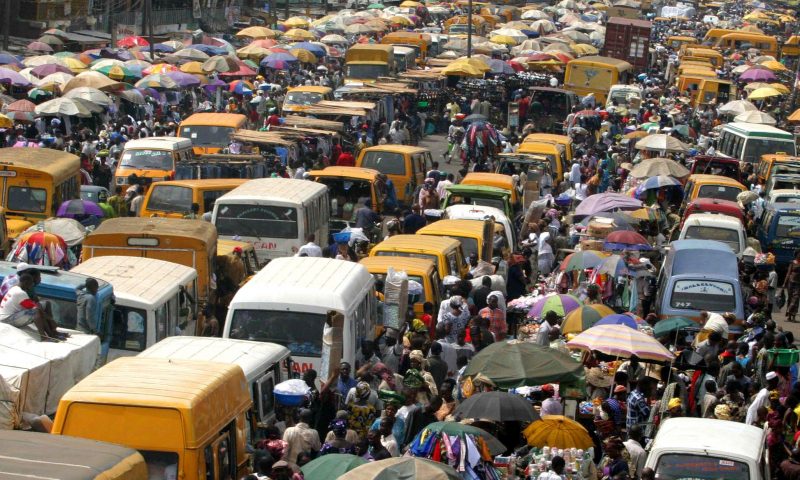
Lagos, South West Nigeria has been rated the second worst city to live in behind war torn city of Damascus, the capital of Syria by the Economic Intelligence Unit (EIU), a sister publication of the Economist of London Newspaper.
The Publication’s 2017 liveability report, which considers 140 major cities, Melbourne in Australia retained its crown as the best city to live anywhere in the world, for seven years running.

Lagos ranks 2nd, behind Damascus and ahead of Tripoli and Dhaka on the annual report by the Economist.


On the other spectrum, Melbourne has topped a list of the World’s Most Liveable city for the seventh year running but terrorism and diplomatic tensions are eroding living conditions worldwide, an annual report from the Economist has found.
The Australian city was ranked number one out of 140 cities, slightly ahead of the Austrian capital Vienna, with the Canadian trio of Vancouver, Toronto and Calgary completing the top five.
“This is a win for all Victorians, who contribute so much to making Melbourne the best place to live in the world,” said Victorian state Premier Daniel Andrews.
The survey, released Wednesday, scores cities on five broad categories: stability; healthcare; culture and environment; education and infrastructure.
The Economist’s Intelligence Unit found that medium-sized cities in wealthy countries fared best.
“These can foster a range of recreational activities without leading to high crime levels or overburdened infrastructure,” the report said.
Major hubs like New York, London, Paris, and Tokyo were hives of activity but lost points due to high levels of crime and overcrowded public transport.
More broadly, global stability continued to weaken due to the increase in terror-related incidents world wide.
“Violent acts of terrorism have been reported in many countries, including Australia, Bangladesh, Belgium, France, Pakistan, Sweden, Turkey, the UK and the US,” the report found.
“While not a new phenomenon, the frequency and spread of terrorism have increased noticeably and become even more prominent.”
The United States had seen a decline in a number of its cities over the past few years related to growing unrest.
“This stems in part from unrest related to a number of deaths of black people at the hands of police officers,” the report found.
“In addition, the country has seen protests held in response to President Trump’s policies and executive orders.”
It said increased diplomatic tensions — from Russia and the Ukraine to North Korea’s nuclear threat and Iran’s relationship with its neighbours — was leading to declining stability scores around the world.
Conflict was the main factor for those cities finishing on the bottom of the survey, with Syria’s Damascus at number 140, behind Nigeria’s Lagos, under threat from Islamist groups like Boko Haram and Libyan capital Tripoli, caught up in middle eastern strife.
“Of the more poorly scoring cities, 12 continue to occupy the very bottom tier of liveability, where ratings fall below 50% and most aspects of living are severely restricted.
“Continued threat from groups such as Boko Haram acts as a constraint to improving stability in Lagos, Nigeria’s largest city.”
According to the rating, Tripoli in Libya is a better city to live in than Lagos, Nigeria.
With AFP reports