

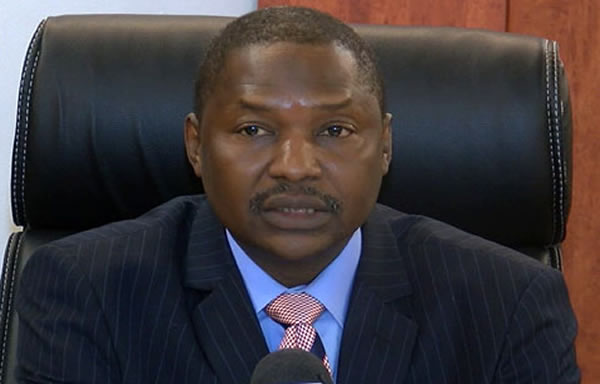
Yusuf Bello| The attorney-general of the federation (AGF), Abubakar Malami on Wednesday said that 2.5 percent of recovered loot should be paid to the asset recovery unit in his office.

The AGF who stated this when he appeared before the senate judiciary committee to defend the 2020 budget of the ministry of justice also informed lawmakers that significant progress had been made in the recovery of looted funds stashed abroad.
Malami said, “We are progressively making vital recoveries of our looted funds stashed abroad. However, let me affirm that the legal procedural requirements for these recoveries are all-together tasking and cumbersome.”
“Most times, we have to engage the services of well-grounded lawyers and consultants to effect recovery. To smoothen our operations in this regard, it was deemed expedient to establish Asset Recovery Unit in my office and so far, the effort are quite sultry.
“I would like to reiterate my request to the effect that about 2.5 percent of the recovered looted money to be earmarked to the Asset Recovery unit to service logistics, operational cost, payment to private lawyers and consultants.”
Malami also urged the lawmakers to approve N30 billion annually for the payment of judgement debts.
He continued, “Ministry of justice was mandated to take inventory and explore avenues for the payment of judgement debt. This has arisen because it was only in 2017 that the sum of N10 billion was disbursed for the payment of judgment debt as an operative.”
“As it stands, the sum of over 150 billion remains unpaid prompting beneficiaries of this sum to keep mounting pressures on the ministry.
“I hereby request that you intervene on these long standing issue by appropriating the sum of N30 billion annually to mitigate this challenge to forestall approved interest and unwarranted litigations arising from our failure to effect payment.”
Leave a Reply