

By our reporter| As the face-off between the Academic Staff Union of Universities (ASUU) and the federal government continues, the University teachers on Thursday explained why they rejected the government proposal to end the five-month-old strike action.

Minister of Education, Adamu Adamu, had earlier on Thursday said Tuesday’s meeting ended deadlocked because ASUU refused to accept the no work, no pay policy as contained in the collective bargaining document.
But in a statement by Emmanuel Osodeke, its president, the union said the proposal made to the Nimi Briggs-led negotiation committee was presented in a “take-it-or-leave-it” manner.
According to Osadeke, the proposal was against the principle of collective bargaining.
“At the commencement of the renegotiation of the 2009 FGN/ASUU Agreement on 16th March 2017, both the Federal Government and ASUU Teams agreed to be guided by the following principles as their terms of reference which includes, reversal of the decay in the Nigerian University System, in order reposition it for its responsibilities in national development,” the statement reads.
“Government’s surreptitious move to set aside the principle of collective bargaining, which is globally in practice, has the potential of damaging lecturers’ psyche and destroying commitment to the university system. This is, no doubt, injurious to Nigeria’s aspiration to become an active player in the global knowledge industry.
“Rejecting a salary package arrived at through collective bargaining is a repudiation of government’s pronouncements on reversing ‘brain drain’.
“The Munzali Jibril-led renegotiation committee, submitted the first draft agreement in May 2021 but government’s official response did not come until about one year later.
“Again, the ‘award’ presented by the Nimi Briggs-led team came across in a manner of take-it-or-leave-it on a sheet of paper. No serious country in the world treats their scholars this way.
“Over the years, particularly since 1992, the union had always argued for, and negotiated a separate salary structure for academics for obvious reasons.
“ASUU does not accept any awarded salary as was the case in the administration of Gen. Abdulsalam Abubakar. The separate salary structures in all FGN/ASUU agreements were usually the outcome of collective bargaining processes.”
The ASUU president said the government imposed the ongoing strike action on them and has encouraged it to linger because of “its provocative indifference”.
He said the major reason given by the federal government for its “miserly” offer, which was paucity of revenue, was not tenable.
“This is because of several reasons, chief of which is poor management of the economy. This has given rise to leakages in the revenue of governments at all levels,” Osodeke said.
“There is wasteful spending, misappropriation of funds, and outright stealing of our collective patrimony.
“ASUU believes that if the leakages in the management of the country’s resources are stopped, there will be more than enough to meet the nation’s revenue and expenditure targets, without borrowing and plunging the country into debt crisis as is the case now.
“At the commencement of the renegotiation of the 2009 FGN/ASUU agreement on March 16, 2017, both the federal government and ASUU teams agreed to be guided by some terms of reference.
“ASUU, however, expressed regrets that the former reneged on its side of obligations and agreed in the agreement.”
The union asked the federal government to return to the draft agreement of the 2009 FGN/ASUU renegotiation committee, whose work spanned a total of five and half years, as a demonstration of good faith.
-Adamu denies Buhari directed him to end strike within two weeks, asks students to sue ASUU
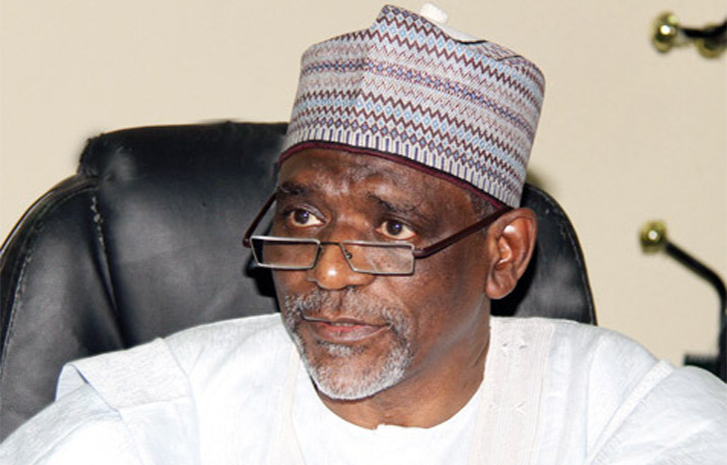
Adamu Adamu
Earlier on Thursday, the minister of education, Adamu Adamu, denied reports that President Muhammadu Buhari directed him to resolve the lingering strike embarked upon by University lecturers in February within two weeks.
Adamu, who made the disclosure in Abuja, while briefing reporters, said the President only told him to resolve the issues within the shortest possible time, contrary to what the Minister of Labour and Employment, Chris Ngige, told the media.
The minister further stated he will not succumb to ASUU’s demand for their members to be paid the backlog of salaries withheld within the period of six months that they were on strike, noting that it is the penalty for their action.
“I think the stand that the government has taken now, not to pay no work done, I think that’s the only thing in the hand of the government to ensure that there’s penalty for some behaviour like this,” he added.
“I believe teachers will think twice before they join strike if they know that at the end, they are not going to be paid.
“The government is not acting arbitrarily. There is a law and I believe this is going to be a strong element to deter many from going on strike.”
Asked if the federal government has plans to compensate students affected by the industrial action, the minister said it is the duty of ASUU to compensate the students, not the federal government.
“We are all hit by this strike action, perhaps because students have to spend an extra one year or two, you can say, they are worst hit. If you had the chance, or the capacity to measure the effect of that on the economy, the economy is also a victim, parents are also victims,” he said.
“It’s a loss for the nation. As far as I know, JAMB will administer examinations, students will use it to process admissions into universities, nothing has changed.
“Who do you assume will compensate students? The federal government? Probably you should take the leaders of strike unions to court to pay them, probably the court will award damages, and then, we’ll see how they pay.”
Leave a Reply