

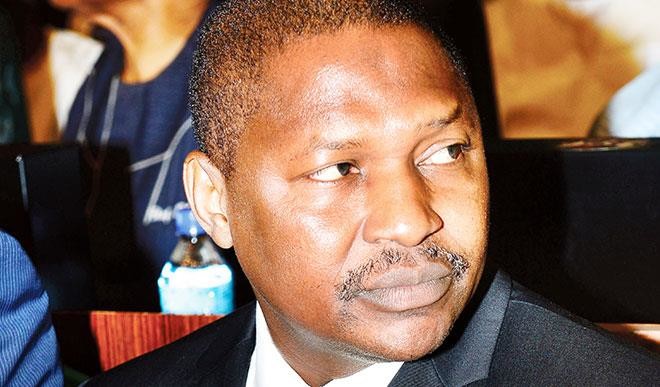
Ebun Francis || The federal government on Thursday said it had the approval President Muhammadu Buhari to publish the names of those who allegedly looted the country’s treasury.

A federal high court had earlier in the year ordered the government to publish the names of public officers huge sums of monies were recovered from.
Adetokunbo Mumuni, the executive secretary of the socio-economic rights and accountability project (SERAP), said in a statement that the Attorney general of the federation, Abubakar Malami gave the assurance after a meeting the group in Abuja.
According to Mumuni, Malami said that President Muhammadu Buhari had directed all the relevant agencies to compile documents on names of all “looters”, with a view to enforcing the judgment of a federal high court in Lagos.
The statement read, “We had a very productive meeting with Mr. Malami, discussing among other critical issues the need for the government to obey the judgment delivered in July by Hon Justice Hadiza Rabiu Shagari following a freedom of information suit number: FHC/CS/964/2016 brought by SERAP.”
“Mr Malami informed us that President Buhari has directed the ministry of justice, ministry of finance, Economic and Financial Crimes Commission (EFCC), Independent Corrupt Practices and Other Related Offences Commission (ICPC) and other relevant agencies involved in the recovery of looted funds to promptly put the documents together with a view to fully and promptly enforcing the judgment by Justice Shagari.”
“We appreciate the opportunity to meet with the attorney-general of the federation and look forward to working with him as the government strives to enforce this very important judgment,” Mumuni said.
“We hope that the implementation of the judgment will now happen sooner rather than later. We believe that effectively implementing the judgment will be a victory for the rule of law, show the way forward in the fight against corruption and impunity of perpetrators in the country, as well as demonstrate Buhari’s oft-repeated commitment to tackling the problem of grand corruption.”