

State governors have committed to setting aside 15 percent of their annual budgets to fund the education sector.

The United Nations recommends that its member states earmark four to six percent of their GDP or 15 to 20 percent of public expenditure (annual budget) to fund education.
However, many coucuries, Nigeria, is one of the countries yet to reach this threshold.
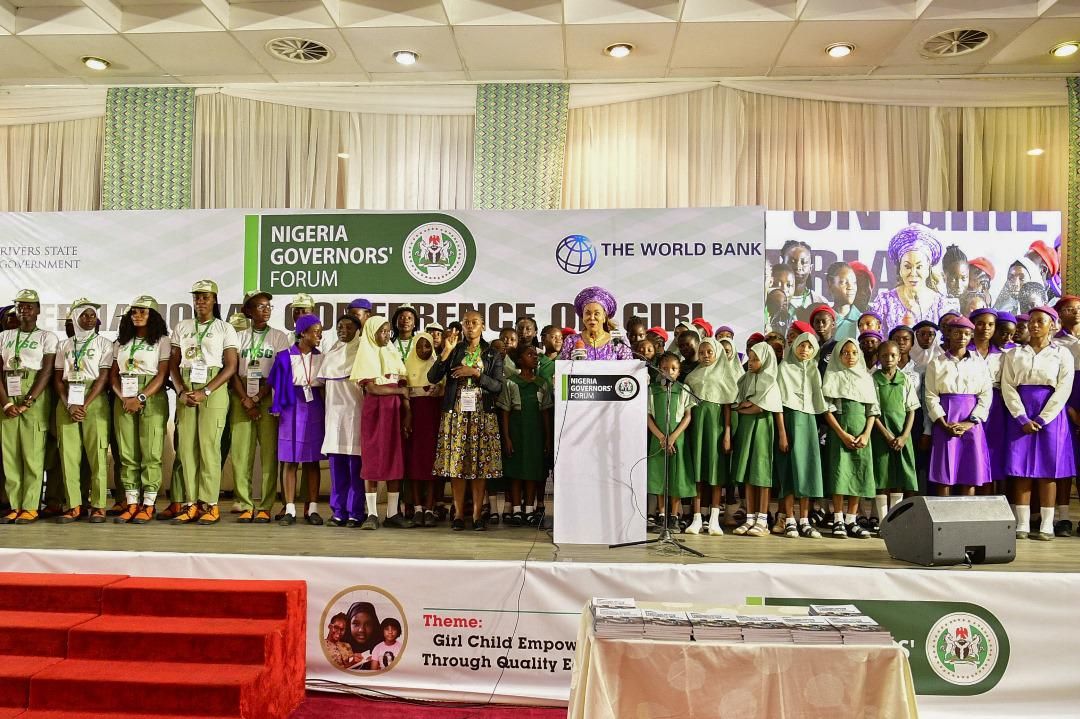
The Nigerian Governors Forum (NGF) hosted its first international conference on girl child education on October 10 and 11, 2024 and the
36 state governments committed to allocating at least 15 percent of their annual budgets to the education sector.
AbdulRahman AbdulRazaq, the Kwara state governor who serves as the NGF chairman, spoke at the event in Abuja.
Represented by Abdulateef Shittu, the NGF director-general, AbdulRazaq said there is an urgent need to invest schools and to address the barriers to girl child education.
“Our commitment as a forum to education financing, especially girl child education funding is unwavering across the states,” he said.
“We declare our readiness to meet the international benchmark of at least 15% annual budgetary allocation to the education sector.”
The NGF’s maiden conference culminated in the launch of an initiative called the Girl Child Education Volunteers’ Advocates (GICEVA).
AbdulRazaq assured that subnationals will mobilise over 774,000 volunteers across local governments to advocate girl child education.
The UN says one in three Nigerian children is out of school, 10.2 million at primary school level and 8.1 million at junior secondary level.
It adds that insufficient domestic finance for primary education caused a shortfall of 378,000 classrooms and about 278,000 teachers.
Among the attendees at the NGF’s conference on girl child education was Uju Kennedy-Ohanenye, the minister of women affairs.
“Picking those children from the street will allow us to have access to their parents, especially their mothers,” she said.
“We have a comprehensive plan to empower these women so they can adequately care for their children.
“This approach aims not only to bring children back into education but also to enhance the economic stability of their families.”
Leave a Reply