

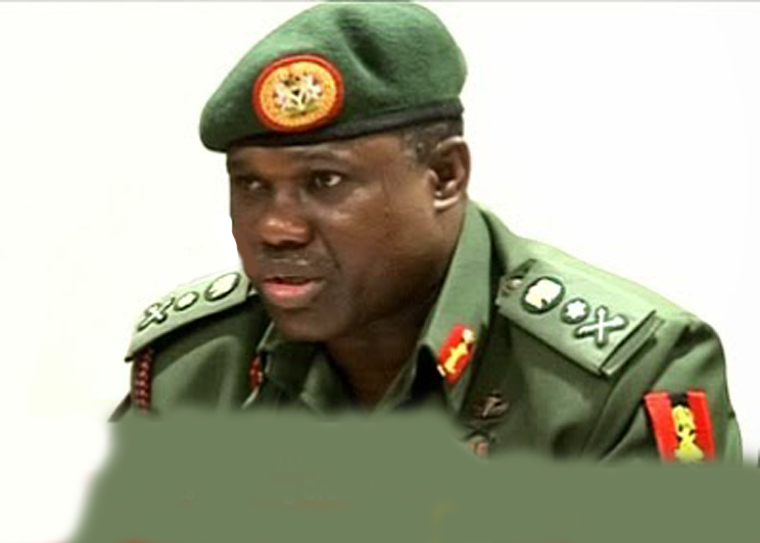
By our reporter/ Former chief of army staff, Kenneth Minimah, was on Wednesday charged before a high court of the federal capital territory (FCT) by the Economic and Financial Crime Commission (EFCC) for allegedly diverting N13 billion meant for procurement of arms.

Minimah was charged alongside A. O. Adetayo, former chief of accounts and budget of the Nigerian Army, and R. I. Odi, former director, finance and accounts of the Nigerian Army.
According to EFCC filings, a report against them was received on August 15, 2016 from the Committee on the Audit of Defence Equipment Procurement in the Nigerian Armed Forces (CADEP) from 2007 to 2015, chaired by Jon Ode.
The report alleged that between 2010 and 2015, “several billions of Naira were received by the Nigerian army from the federal government for procurement of military hard-wares and were discovered to have been misappropriated by senior army officers”.
The report further alleged that the defendants misappropriated the sum of N13,798,619,309.
“The sums were transferred from various accounts belonging to the Nigerian army and moved to company accounts of entities that had no business relations with the Nigerian army,” the EFCC stated.
“This caused huge loss to the Nigerian army and the federal government of Nigeria through the unlawful gains made by the aforementioned officers who converted the monies for their personal use.
“The legal advice on the investigation opined that a prima facie case has been sustained against the Officers”, EFCC added.
According to the anti graft agency, the outcome of the investigation led to the filing of charges against the three officers named in the alleged fraud.
Minimah and the two other defendants have filed a suit before the Abuja federal high court challenging the legality of the charges preferred against them.
Leave a Reply