

The National Bureau of Statistics [NBS] last week claimed that the country’s
inflation fell again to 18.02 percent in September, its lowest level in more than three years.

But at markets across the country the story sounds different as prices of goods remain high with no difference from earlier in the year.
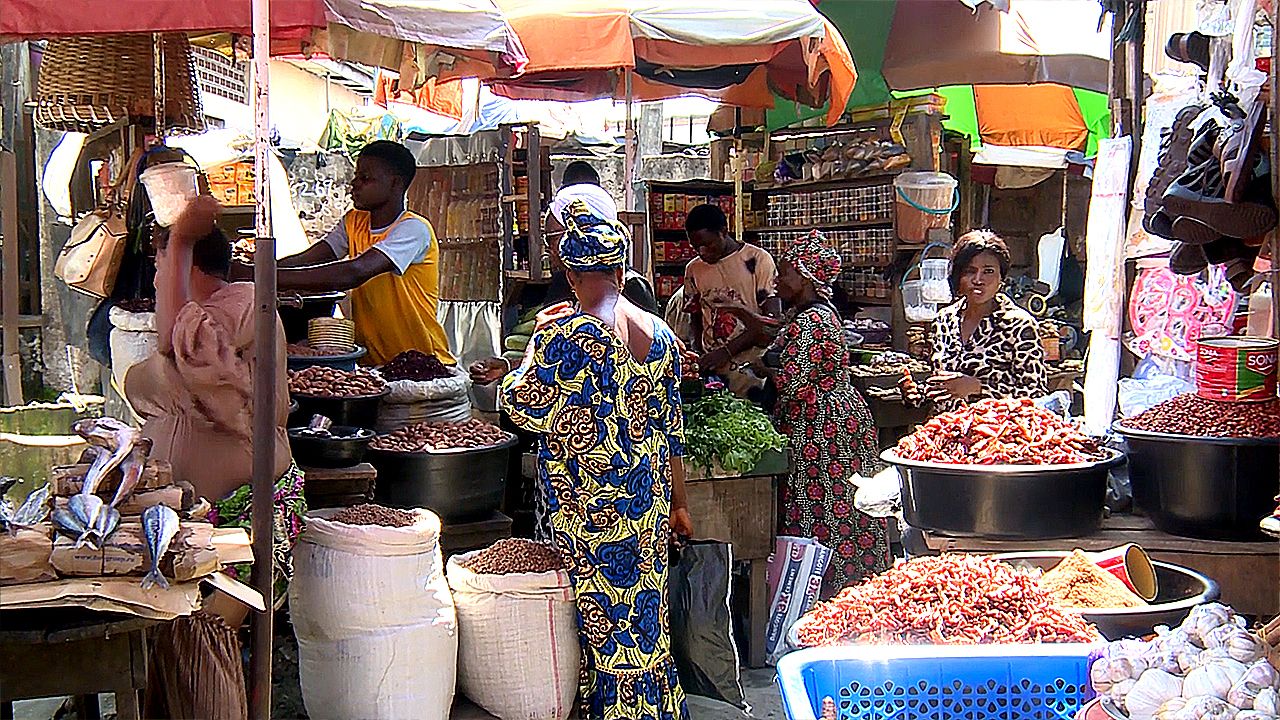
According to Channels Television survey at Oyingbo Market in Lagos, traders say they have seen only flashes of change.
A bag of rice that cost ₦80,000 in January now sells for about ₦70,000.
Beans have eased a bit too, and eggs are a little cheaper.
But tomatoes? They have more than doubled.
And bread, the one thing no household can do without, now costs far more than it did at the start of the year.
Then came another twist, the new petrol price hike to ₦922 per litre.
For traders and transporters, that one change can undo months of progress.
Moving goods now costs more, and every extra naira in fuel eventually shows up in the price of food.
“Tomato no cheap,” a vegetable seller says.
“Fuel don rise, so fare go rise too. E no pay us,” a bus driver added.
Nigeria’s headline inflation rate dropped to 18.02 per cent in September 2025, representing a significant 2.1 percentage point decrease from the 20.12 per cent recorded in August 2025.
This is according to the latest Consumer Price Index (CPI) report released by the National Bureau of Statistics (NBS) on Wednesday. Data from the report indicate that the country has now recorded six consecutive months of declining inflation since April 2025.
The decline comes after a series of statistical adjustments earlier this year, including a change in the base year and a reweighting of items in the consumer price basket. Inflation had previously peaked at nearly 35 per cent in December 2024.
So while inflation charts are sliding down, market prices are still finding new ways to climb.
The numbers may show a slowdown, but for families in Lagos, and other parts of the country, survival costs just as much, sometimes even more.
Inflation may be falling, but at Oyingbo Market, and other markets prices still have a life of their own.
With Channels Television report
Leave a Reply