

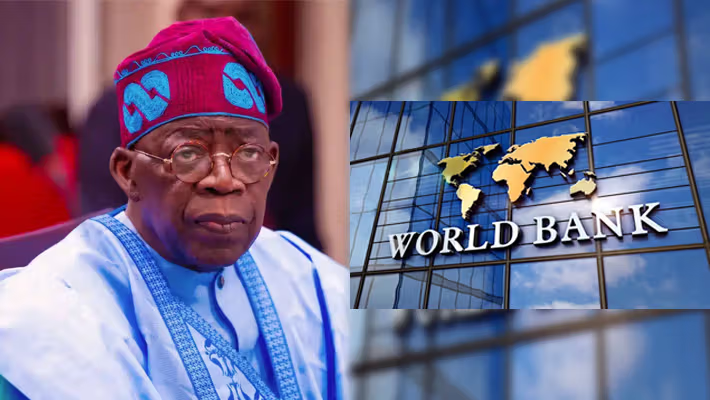
Nigeria’s debt to the International Development Association( World bank) has climbed to $18.7 billion, rising by $1.9 billion in one year.

The country is now the third-largest borrower in the World Bank’s concessional portfolio.
While the loans offer favourable terms, analysts warn that their accumulation adds to external debt risks.
Experts say future sustainability will depend largely on Nigeria’s revenue strength and disciplined borrowing.
The top 10 borrowers collectively account for about 60% of the IDA’s total exposure.
The increase largely stems from ongoing disbursements under Nigeria’s Country Partnership Framework with the World Bank, alongside expanded commitments in critical sectors such as health, education, infrastructure, and poverty alleviation programs.
These IDA credits are highly favorable, often carrying zero or near-zero interest rates and repayment terms stretching up to 38–40 years with extended grace periods, making them among the most affordable forms of external financing available to low-income countries.
The development comes amid broader fiscal pressures facing Africa’s largest economy, including naira volatility, fluctuating oil revenues, and the need to fund development priorities while managing tighter domestic revenue streams.
As of June 30, 2025, Nigeria’s total external debt stood at approximately $46.98 billion, according to the Debt Management Office (DMO), with the World Bank Group representing the single largest creditor at $19.39 billion (including $18.04 billion from IDA and $1.35 billion from the International Bank for Reconstruction and Development).
This means World Bank facilities account for roughly 41.3% of the country’s multilateral and bilateral external obligations.
While the concessional nature of IDA loans eases immediate repayment burdens compared to commercial or market-rate borrowing, the rapid accumulation has renewed discussions on long-term debt sustainability.
Analysts note that Nigeria’s growing reliance on such multilateral support reflects efforts to stabilise the economy and invest in human capital amid global uncertainties, though questions persist about the balance between borrowing for growth and ensuring fiscal space for future generations.
The Federal Government has consistently maintained that these funds target high-impact projects designed to boost productivity, create jobs, and reduce poverty.
Leave a Reply