

By Valentine Obienyem

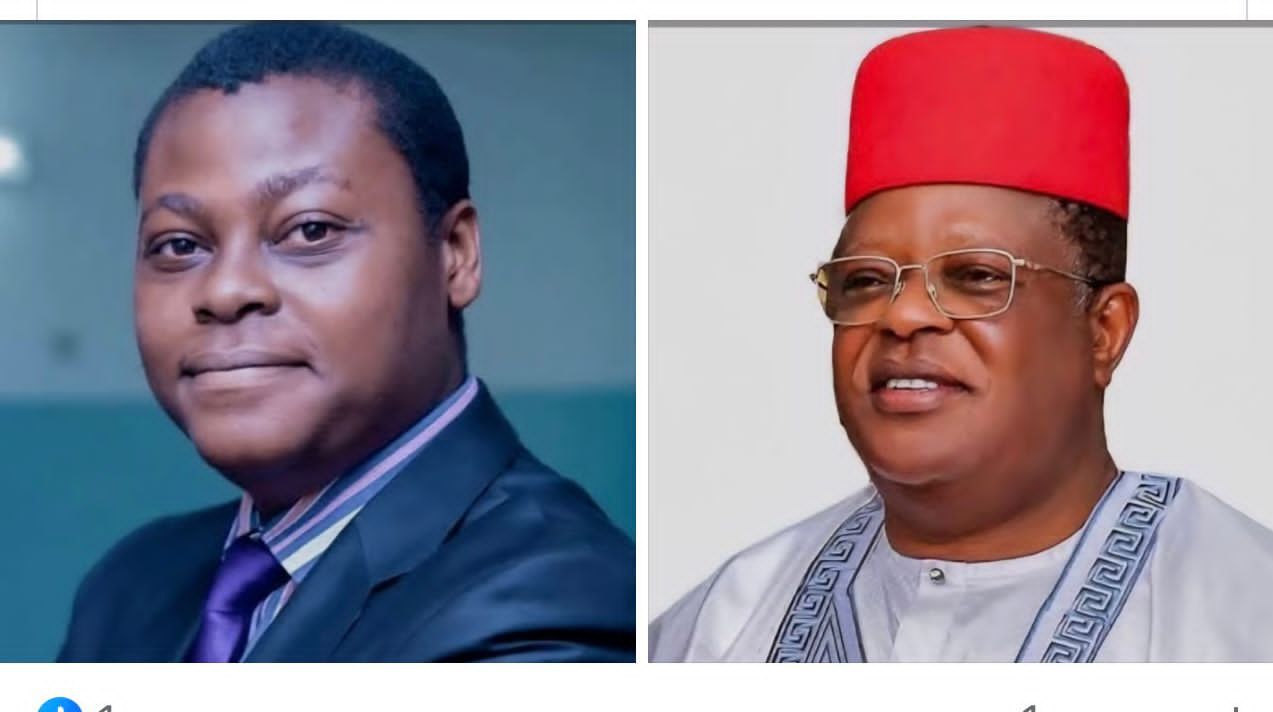
I have watched Rufai’s encounter with Minister Umahi countless times, and I have also followed the reactions that have trailed it.
Rufai embodies the kind of journalist Nigeria desperately needs today – one who speaks truth without disguise, fear, or favour. Many politicians dread him because even the very stones on which he walks emit sparks that burn those with skeletons in their cupboards.
Is his approach harsh? Yes. But it should be. The problems confronting Nigeria are so deep, so maddening, that they demand a journalism laced with urgency, outrage, and moral fire. He had to shout and whimper because our leaders have hearing deficiencies!
Is he too confrontational? Perhaps – but how else can truth make itself heard in a land where lies sit comfortably in power? Soft tones have been tried, and they have failed. For decades, journalists have spoken in measured politeness while corruption grew fat and impunity strutted unashamed. A nation deafened by hypocrisy needs the voice of one who dares to shout at Ministers.
Does he go too far sometimes? Maybe. But what is “too far” in a country where leaders travel in convoys through potholes they refuse to fix, where promises of change dissolve into excuses, and where the poor are told to tighten belts that are already cutting through their flesh? In such a place, moderation easily becomes complicity.
Should journalism be passionate? Yes – passionately moral, passionately honest, passionately human. Rufai’s indignation is not a loss of professionalism; it is the recovery of conscience. A journalist without passion becomes an announcer of decay rather than a challenger of it. I love what the Arise team is doing.
Should journalists fear being accused of bias when they speak against power? Only if silence has ever saved a nation. True journalism is not neutrality between truth and falsehood; it is loyalty to justice and accountability. Rufai’s manner may offend the comfortable, but it comforts the offended – those whose daily lives bear the weight of bad governance.
Is anger unprofessional? Not when it springs from integrity. There is anger that destroys, and there is anger that redeems – the kind that drives reform, exposes hypocrisy, and awakens the sleeping conscience of a people. Rufai’s is of the latter kind -?an anger guided by reason, tempered by truth, and purified by purpose.
In his exchange with Minister Umahi, Rufai was right. He spoke not merely as a journalist but as a citizen burdened by the nation’s endless decay. His anger was not personal; it was national. It was a reflection of our collective frustration and anger.
His righteous indignation reminds me of Seneca’s Essay “On Anger.” Seneca warns that anger is “a madness of the soul,” urging us to remember how short life is and how foolish it is to waste it on hatred. Yet, in some passionate pages of the same work, Seneca himself grew angry at the follies and cruelties of men. That paradox – condemning anger while writing with anger – is the same tension Rufai embodies: moral outrage born of love for justice.
Rufai’s anger was not against Umahi as a person but against what Umahi symbolises: the Tinubu administration’s arrogance and detachment from the sufferings of ordinary Nigerians. The other day, I travelled to Asaba, and the dual carriage road along the town was almost impassable. We spent hours crawling along a stretch of road that should have taken minutes. That is the kind of reality Rufai was protesting.
He is angry that vital roads across the country remain undone while the government preoccupies itself with a so-called coastal highway – borrowing trillions for it and chaining the next generation to debt. His anger, therefore, was a form of protest, his way of using the platform available to him to speak for millions who have been silenced by hardship and hopelessness.
As for Umahi, he epitomises a troubling brand of leadership. Even as Governor of Ebonyi State, he often stood against the collective interests of his own people in both words and actions. He is always subsumed by selfishness. His unprovoked attacks on Mr. Peter Obi only revealed the pettiness of a man who confuses power with wisdom.
That is why we need more voices like Rufai’s – courageous, unapologetic, and unbending. Nigeria’s revolution will not come through polite silence, but through the righteous indignation of men and women who still care enough to be angry.
Are you angry? I am!
Leave a Reply