

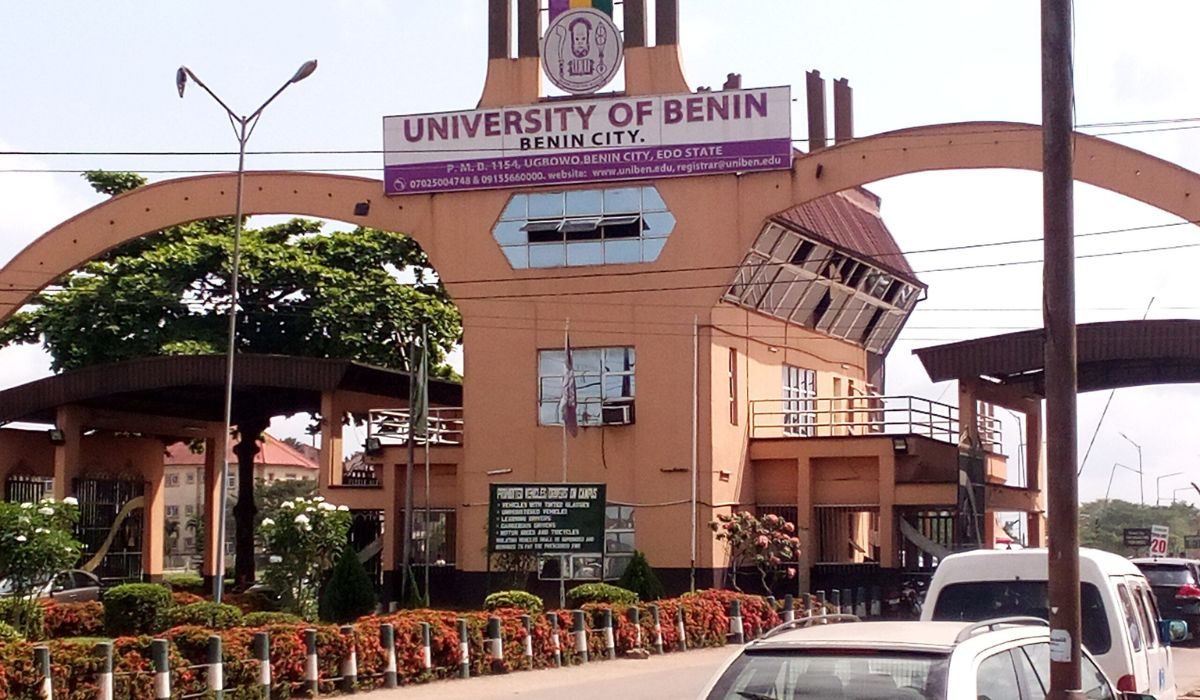
A dangerous academic crisis is unfolding in Nigeria, and thousands of innocent graduates may pay the price for institutional failures they did not commit.
Canada’s International Credential Assessment Service (ICAS) is no longer accepting qualifications from four Nigerian universities: Imo State University (IMSU), Federal University of Technology, Owerri (FUTO), Enugu State University of Science and Technology (ESUT) and the University of Benin (UNIBEN).
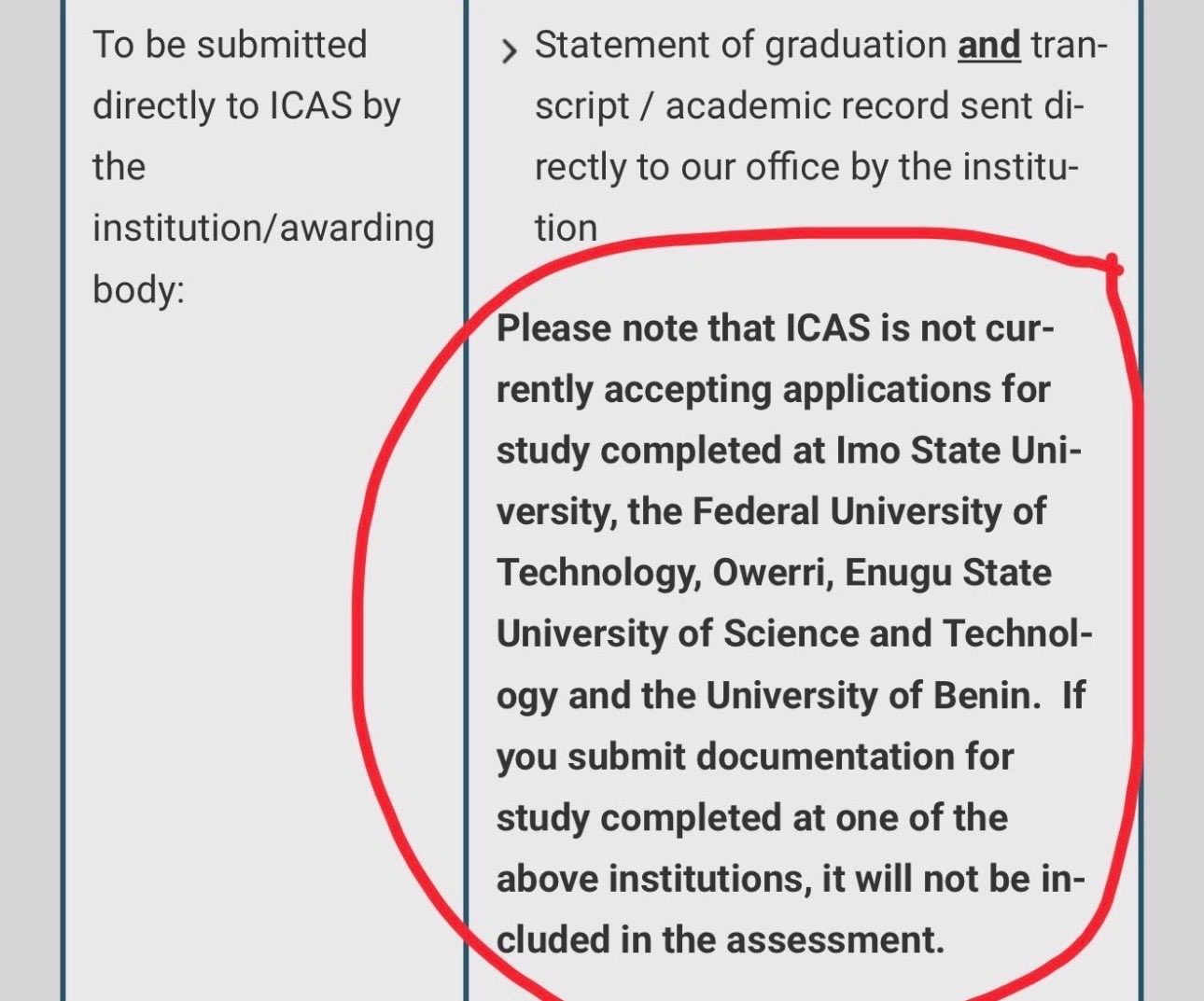
The notice, published on ICAS’ Nigeria document-requirements page, reads: “Please note that ICAS is not currently accepting applications for study completed at Imo State University, the Federal University of Technology, Owerri, Enugu State University of Science and Technology and the University of Benin.”
The development was brought to wider public attention on Saturday by Alex Onyia, Chief Executive Officer of Educare, in a post on X.

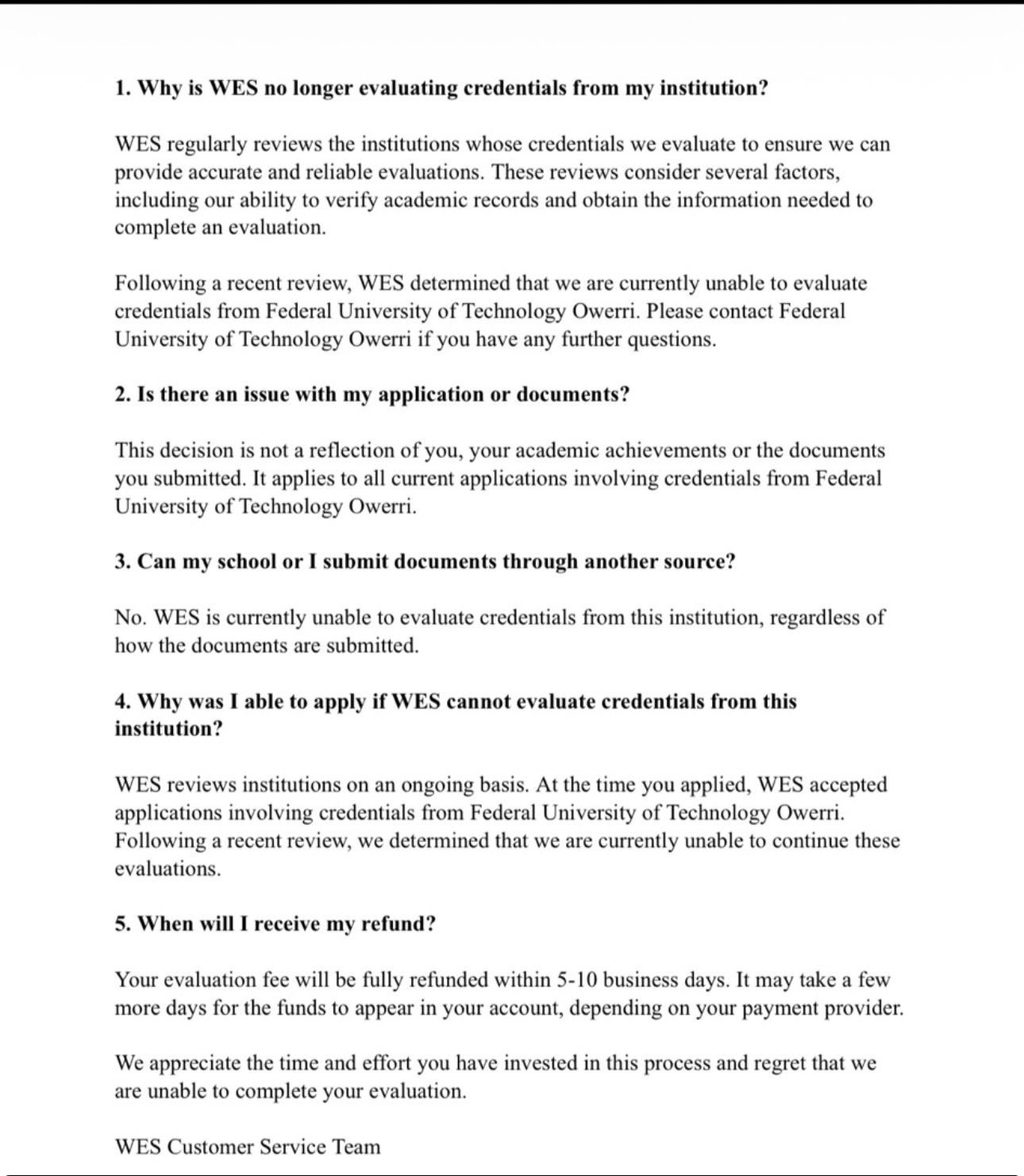
“ Canada’s International Credential Assessment Service (ICAS) is no longer accepting qualifications from IMSU, FUTO, ESUT and UNIBEN. There are also concerns about similar restrictions by World Education Services (WES),” Onyia wrote.
The human cost
Imagine spending five years in a university, studying legitimately, attending lectures, writing examinations and earning a degree honestly, only to struggle to get that certificate recognised abroad because of institutional failures.
That is now the reality facing past and present graduates of the four affected institutions.
For many, credential evaluation is not a formality. It is the gateway to postgraduate admission, professional licensing, employment and immigration in Canada and other countries that rely on designated assessment bodies.
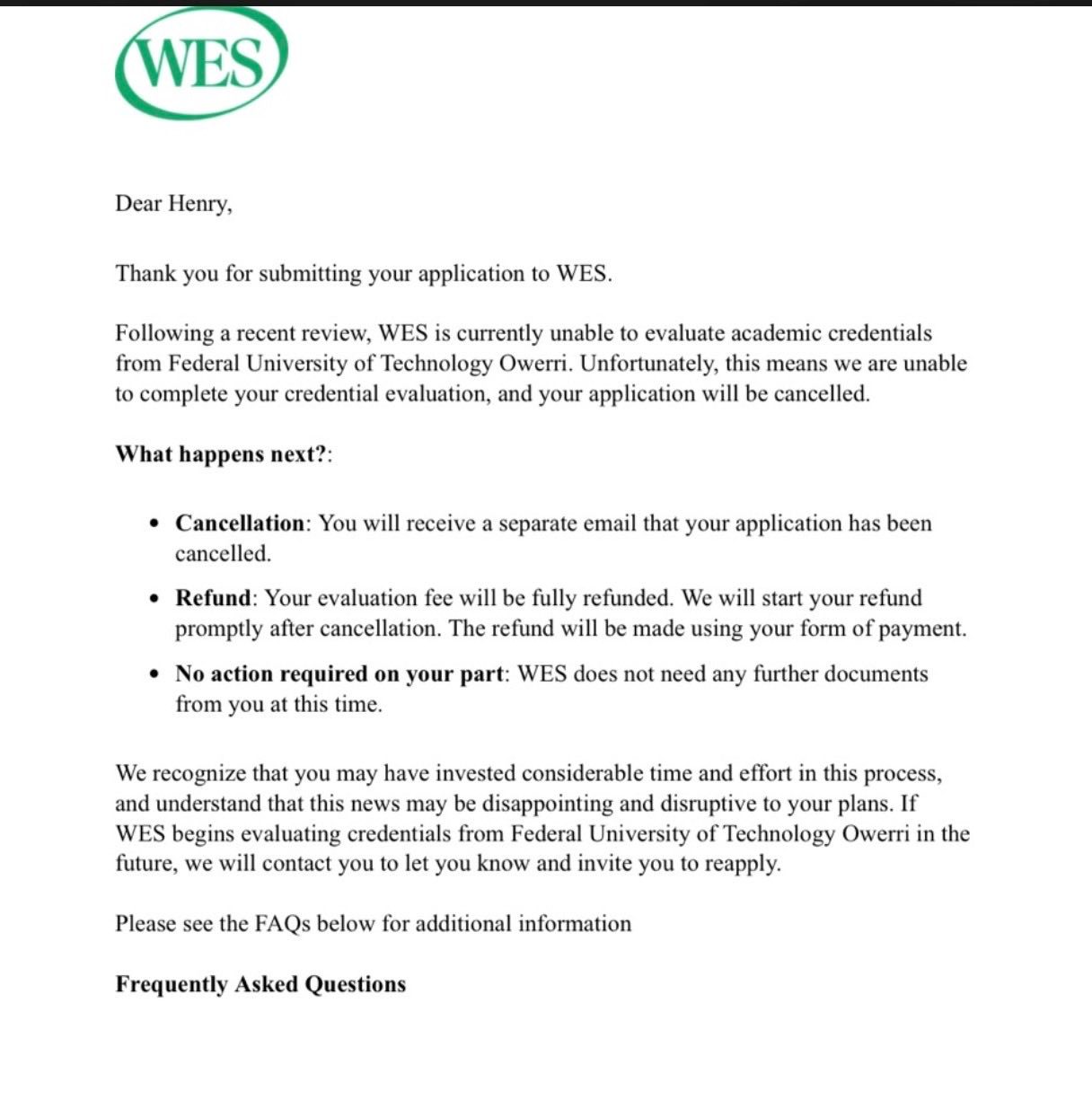
Reports also indicate that WES has suspended evaluation of credentials from the same four universities, a development that, if sustained, would further narrow options for affected graduates. ICAS has not publicly disclosed a reason for its decision, and Onyia has attributed the move to concerns about academic corruption.
‘We are fighting to protect innocent students’
Onyia warned that the fight against academic fraud is often misunderstood.
“When we fight academic fraud, some people think we are fighting individuals. We are actually fighting to protect the future of thousands of innocent students,” he said.
He cautioned that those perpetrating fraud will make their money and retire comfortably, while innocent graduates will spend years suffering the consequences.
“Academic fraud destroys our country’s reputation faster than almost anything else,” Onyia added.
A warning to other universities
Onyia singled out the University of Nigeria, Nsukka (UNN) for urgent action, warning that if nothing is done to eliminate academic fraud and fix the university, it could be next.
He also raised concern that other institutions, including Nasarawa State University, may soon follow suit if systemic weaknesses are not addressed.
“I warned, and I am still warning, about fraud in our education system. It is everyone’s fight because both the innocent and the culprits will bear the brunt,” he said.
In contrast, Onyia commended Abia State University (ABSU), saying the institution was lucky and urging it to continue to fight corruption fiercely.
A disaster Nigeria cannot ignore
The implication is stark: the actions of a few can taint the qualifications of many, erode international confidence in Nigerian degrees, and punish graduates who did everything right.
Stakeholders say the moment calls for urgent, transparent reforms by universities, regulators and the Federal Government, including stronger verification systems, credible examinations, secure records and swift sanctions for fraud, to restore trust before more institutions are affected.
For now, graduates of IMSU, FUTO, ESUT and UNIBEN are left in uncertainty, waiting for their universities and the assessment bodies to clarify what comes next.