

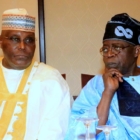
“A cheaper bus without an affordable passenger is not economic recovery,” Atiku said.
Former Vice President of Nigeria and presidential candidate of the African Democratic Congress (ADC), Atiku Abubakar, has dismissed President Bola Tinubu’s latest promise to work with governors to reduce public transport fares as a desperate and belated response to a cost-of-living crisis created by his own government.

In a statement issued by his Senior Special Assistant on Public Communication, Phrank Shaibu, Atiku described the federal government’s CNG conversion figures as a damning reflection of the Tinubu administration’s performance, saying the government has unwittingly published its own scorecard of failure.
“If Tinubu’s grand strategy for cushioning the consequences of his reckless and poorly thought-out subsidy removal is CNG conversion, then the admission that only about 120,000 vehicles have been converted in more than three years is not an achievement. It is an advertisement of policy failure.

“Against widely cited estimates of roughly 14 million vehicles on Nigerian roads, 120,000 conversions amount to less than one per cent.
“That is the government’s own number. That is Tinubu marking his own examination script.
“If a student returned less than one per cent in his core subject, WAEC would not call it progress. No university would call it excellent performance. Yet Tinubu wants Nigerians to reward the political equivalent of that catastrophic score with another four years.
“The truth is simple: Nigeria cannot afford another four years of monumental failure.”
Atiku said Tinubu’s declaration that “cheaper fuel should result in cheaper fares” is equally a confession that the administration’s energy policy has been fundamentally disconnected from the daily survival of Nigerians.
“For more than three years, Nigerians begged this government for relief. Tinubu removed subsidy without a credible cushioning framework, watched transport costs explode, watched food prices follow, watched businesses suffocate under crushing energy costs, and repeatedly told Nigerians that their suffering was the unavoidable price of reform.
“Now that elections are approaching, and Nigerians are rallying behind Vice President Atiku Abubakar’s proposal for a production-based subsidy to immediately tackle the cost-of-living crisis created by Tinubu, the same government that ridiculed and criticised Atiku’s plan has suddenly discovered that Nigerians need cheaper transportation.
“This is medicine after death. You cannot break a man’s leg, abandon him in pain for three and a half years, then return with crutches and demand applause for compassion. Tinubu created the transport crisis; CNG cannot now be packaged as heroism.”
Atiku said CNG expansion may be desirable, but warned that an alternative fuel cannot be presented as the solution to a purchasing-power crisis.
“CNG can make a converted bus cheaper to operate. It cannot make a poor Nigerian richer.
“That distinction demolishes the propaganda.
“Go to the motor parks. Nigerians are travelling less because they cannot afford to travel. Workers calculate whether transport to work will swallow their wages. Traders are buying less because transportation is eating into their capital. Students struggle with daily fares. Farmers pay heavily to move food from farms to markets.
“So what exactly has Tinubu solved if the bus becomes cheaper to operate but the passenger has become too poor to enter it?
“A cheaper bus without an affordable passenger is not economic recovery.”
Atiku said the government’s celebration of 120,000 conversions in a country with millions of vehicles is the mathematical equivalent of celebrating a bucket of water while the house is still burning.
“A bus driver does not buy tyres with a presidential statement. A market woman does not transport tomatoes with a government committee. A farmer does not move yam, rice and maize with promises. Spare parts, maintenance, food, rent and virtually every other operating cost have risen.
“And now Nigerians are being told to wait until October 1 before they may begin to feel relief from a crisis they are suffering today.
“Nigerians are hungry today. Transport is expensive today. Food is expensive today. Businesses are dying today. Why must relief arrive by appointment?”
Atiku said the deeper failure of the administration is its refusal to understand that Nigeria’s transportation crisis is ultimately a cost-of-living and purchasing-power crisis.
“You cannot solve a purchasing-power crisis simply by changing the fuel inside a bus. What matters to the Nigerian worker is not merely whether the bus runs cheaply, but whether his salary can still afford the fare, food, rent, medicine, school fees and the basic dignity of life.
“When fuel rises, transport rises. When transport rises, food rises. When food rises, the household shrinks. That is the economic chain Tinubu broke, and that is the chain Atiku intends to repair.”
Atiku said Nigeria needs a targeted, transparent and fiscally capped subsidy linked to domestic production, deliberately designed to attack the cost-of-living crisis at its source.
“Fuel subsidy must return for struggling Nigerians, not the rich friends of the President and multinational companies, but a targeted production intervention that is transparently budgeted, independently audited and guarantees that the benefit reaches consumers.
“We will support domestic refining. We will track every barrel. We will cap the cost. We will reduce energy costs. And we will ensure that money and relief reaches the commuter, farmer, worker, trader and small business owner — not politically connected middlemen.
“That is the difference between Tinubu and Atiku: Tinubu manufactures hardship and distributes palliatives. Atiku will attack hardship at its source.
“For more than three years, Tinubu told Nigerians to endure pain while government celebrated bigger revenues. Families became poorer, businesses collapsed, transport fares multiplied, and workers watched the value of their wages disappear.
“Now, with Nigerians responding positively to Atiku’s alternative, the same government that attacked subsidy as economic heresy has suddenly discovered Atiku’s central argument: when energy becomes cheaper, transportation becomes cheaper; when transportation becomes cheaper, food and production costs begin to fall.
“The question before Nigeria is therefore bigger than, How cheaply can a bus run?
“The real question is: How cheaply can a Nigerian live?
“Tinubu has failed that examination. His own CNG numbers have supplied the score sheet.
“President Tinubu, Nigerians have paid enough for your economic experiment. Too little. Too inadequate. Too late. Your time is up. Prepare your handover.
“We are coming to make life affordable again.”