

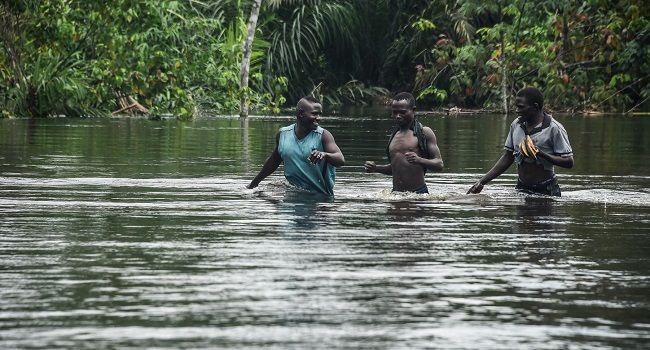
The Nigeria Hydrological Services Agency (NIHSA) has forecast a high risk of riverine flooding across 15 states between September 19 to 25.
In its national flood advisory issued on Friday, the agency said rising river levels could trigger flooding in communities located on floodplains during the seven-day period.
The affected states are Imo, Cross River, Ebonyi, Benue, Anambra, Akwa Ibom, Lagos, Rivers, Edo, Kogi, Taraba, Delta, Bayelsa, Enugu and Abia.
NIHSA said nine river stations are at risk and required close monitoring.

The agency listed Obubra, Itigidi and Epento on the Cross River among the locations identified in the assessment.
According to NIHSA, significant populations and critical infrastructure are exposed to flood risks across the affected areas.
In Cross River, 2,471 communities, 703 schools, 344 health facilities, 145 markets, 453 religious centres and 854 hectares of farmland were identified within the flood-risk areas.
Umar Mohammed, NIHSA director-general (DG), in a statement on Saturday, called on state and local government emergency management authorities, traditional rulers and community leaders to take immediate precautionary measures.
He advised residents in flood-prone communities to move people, livestock and valuables to safer, higher ground where necessary.
Mohammed also asked communities to activate local early-warning and response mechanisms and monitor the agency’s flood advisories and river-level updates.
He warned residents against crossing flooded roads, bridges and fast-moving water, whether on foot or in vehicles.
The NIHSA DG called on relevant authorities and communities to pre-position relief materials, safe drinking water, water-treatment supplies and first-aid materials.
He also asked them to identify and prepare safe shelters for possible temporary evacuation.
Mohammed advised residents to clear blocked drainage channels and river outlets where it is safe to do so and avoid construction or habitation in vulnerable floodplain areas.
He said early action and adherence to official flood warnings are critical to reducing the risk of loss of lives, property and livelihoods.
The NIHSA DG said the agency would continue to monitor hydrological conditions and river levels across the affected areas and issue further updates as necessary.