

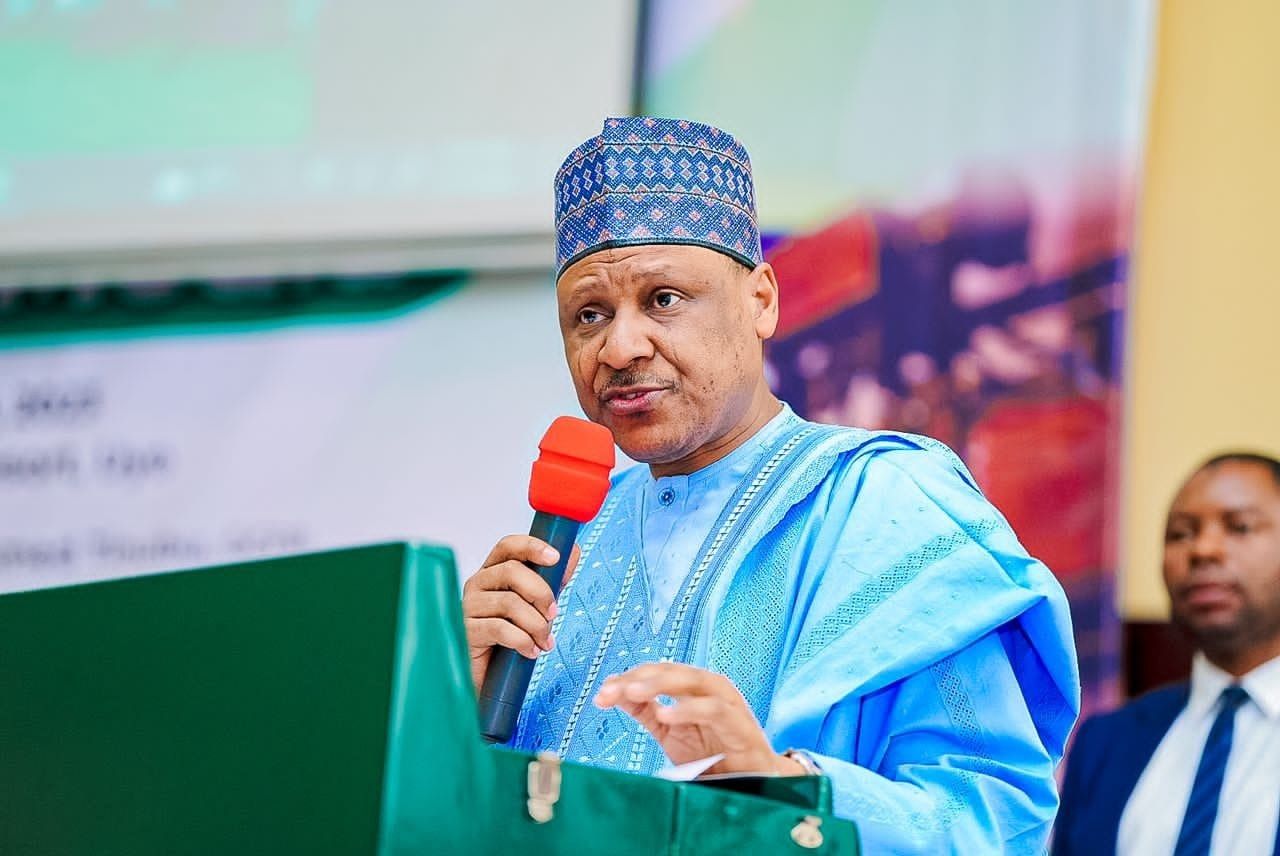
The Minister of Information and National Orientation, Mohammed Idris, has cautioned against calls to restore the petrol subsidy, saying a return to the old regime would undermine Nigeria’s improving fiscal position, weaken investor confidence, and reverse gains from the economic reforms of the President Bola Tinubu Administration.
President Tinubu declared an end to the subsidy regime upon assumption of office in May 2023.
Referring to an Op-Ed published on Monday, August 24, 2026, in some national dailies, titled “Restoring Fuel Subsidy Will Reverse Nigeria’s Economic Gains,” the Minister outlined the fiscal benefits of subsidy removal, the economic risks averted, and the difficult trade-offs that would confront the country should petrol subsidy be reintroduced.
“Restoring subsidy would almost instantly return Nigeria to the economic conditions of 2022, recreating the same fiscal pressures, distortions, scarcity and incentives for arbitrage that made the old system unsustainable,” Idris said.

Idris said proponents of subsidy restoration must confront its real opportunity costs.
“Do we restore petrol subsidy, or sustain student loans and consumer credit for young Nigerians? Do we restore subsidy, or preserve higher allocations to states and local governments? Do we restore subsidy, or continue funding roads, rail, power and security? Do we restore subsidy, or strengthen the fiscal capacity required to expand healthcare, education and social protection for vulnerable Nigerians?” he asked.
The Minister recalled that in 2022, amid declining oil production and weak revenues, Nigeria spent about $10 billion on fuel subsidies, while the World Bank warned that the subsidy was consuming resources that could otherwise have supported education, healthcare, infrastructure and social protection.
Citing the Federal Government’s recently presented “Nigeria’s Reform Scorecard: The Benefits, Costs and Harms Prevented,” Idris said the Honourable Minister of Finance and Coordinating Minister of the Economy, Dr Taiwo Oyedele, disclosed that subsidy savings mobilised ₦15.8 trillion in resources for the Federation between June 2023 and December 2025.
He explained that approximately ₦5.43 trillion accrued to the Federal Government, ₦6.52 trillion to states and ₦3.88 trillion to local governments, clarifying that the ₦15.8 trillion was not a separate pool of cash but resources released within the Federation’s wider fiscal system.
According to Idris, the increased fiscal space has strengthened the capacity of states and local governments to meet salary and pension obligations and invest in essential services, while supporting major federal investments in infrastructure, security, agriculture and human capital.
He said the Reform Scorecard recorded approximately ₦6.47 trillion in additional expenditure on strategic infrastructure, alongside more than ₦400 billion committed to major social investment initiatives, including NELFUND, MOFI Real Estate Investment Fund, MREIF and CREDICORP. In contrast, social transfers have reached more than 10 million Nigerian households.
Idris added that Nigeria was already carrying an electricity subsidy estimated at ₦3.14 trillion between June 2023 and December 2025, warning that reintroducing petrol subsidy would impose an additional burden on public finances.
He noted that the Organised Private Sector and the wider economic community had also cautioned against reversing the reform.
“Nigeria cannot build tomorrow’s economy by returning to yesterday’s unsustainable subsidy regime. We have moved beyond that model,” he said.
He urged Nigerians to view the reforms in the context of the country’s long-term economic stability and the need to build a stronger and more productive economy.