

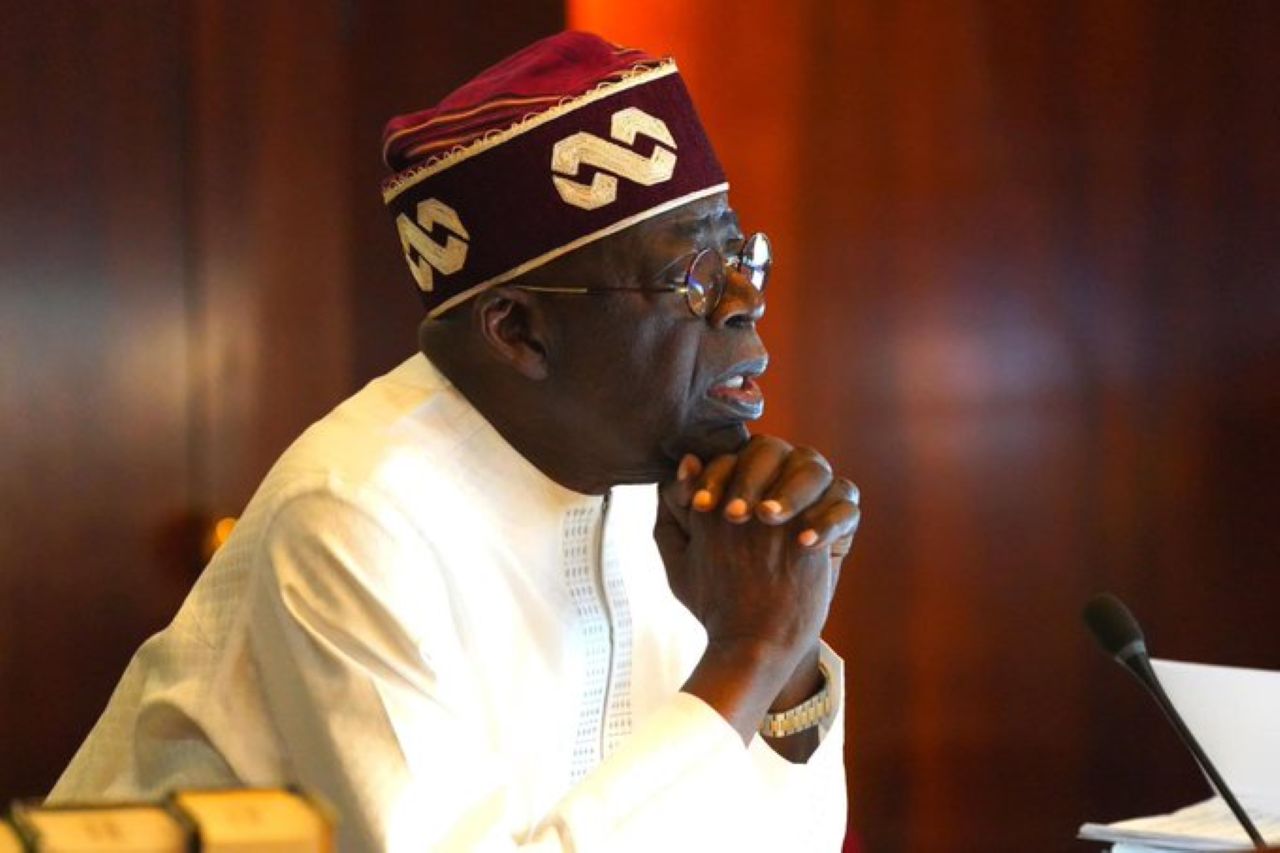
ABUJA — President Bola Tinubu has received the bill to amend the Constitution to create State Police in Nigeria, moving the country a step closer to decentralised policing.
The Constitution (Sixth Alteration) Bill was formally transmitted to the President on Wednesday by his Special Advisers on Senate and House of Representatives Matters, Senator Basheer Lado and Wasiu Olanrewaju-Smart.

Chief of Staff to the President, Femi Gbajabiamila, who disclosed this in a statement, said Tinubu will review the bill in consultation with the Attorney-General of the Federation, Lateef Fagbemi, before assenting to it at a formal signing ceremony.
A unanimous state approval

The transmission followed the approval of the amendment by all 36 State Houses of Assembly.
Clerk to the National Assembly, Kamoru Ogunlana, announced on Monday that the approvals had cleared the way for the bill to be sent to the President.
The figure far exceeds the constitutional threshold of at least 24 state assemblies required under Section 9(2) of the 1999 Constitution, as amended.
On Wednesday, the Senate directed the Clerk to transmit the bill to Tinubu for assent, following a motion by Senate Leader Opeyemi Bamidele.
The Senate also asked the Executive to forward the National Policing Bill to the National Assembly for scrutiny and expeditious passage, to provide the operational framework for subnational policing.
What happens next
Gbajabiamila, who chairs the Presidential Working Group on State Police, said the group, with support from the Policy Advisory Committee, has held extensive stakeholder engagements and nationwide consultations on a draft National Policing Bill.
That draft has now been submitted to the Federal Ministry of Justice for legislative drafting validation.
“Upon receipt of the validated version, the Working Group will review it and present it, alongside its report, to Mr President for consideration,” he said.
He conveyed Tinubu’s appreciation to the Senate President, the Speaker of the House of Representatives, members of the National Assembly, the Clerk, the 36 state governors, the State Houses of Assembly, and all Nigerians “who have demonstrated a shared commitment to addressing the nation’s security challenges.”
The case for state police
Proponents say Nigeria’s centralised policing structure has struggled to respond to persistent insecurity, from banditry and kidnapping to communal clashes and terrorism.
Bringing law enforcement closer to communities, they argue, would improve intelligence gathering, enable faster responses to local threats, and allow each state to address its peculiar security challenges.
State-controlled forces, supporters add, would strengthen grassroots intelligence and complement — not replace — existing federal security arrangements.
The fears
Critics warn of accountability, funding, and political interference.
In September 2025, Rep. Yusuf Gagdi argued that properly funded community policing would be more effective than state police, warning that placing police commands under governors could worsen insecurity.
Community-based outfits already in operation, such as Amotekun in the South-West, have faced their own limits — including restricted access to superior weapons — despite playing a visible role in local security.
Human rights lawyer Femi Falana has backed decentralised policing in principle, but insisted on clear jurisdictions and legal safeguards to prevent political intimidation and clashes between agencies.
He also cautioned that state police alone cannot fix insecurity without tackling poverty and unemployment.
What to watch
Assent to the alteration bill will only create the constitutional basis for state police. The real test will be the National Policing Bill — how it defines funding, command, oversight, recruitment, and the relationship between state forces and federal agencies.